
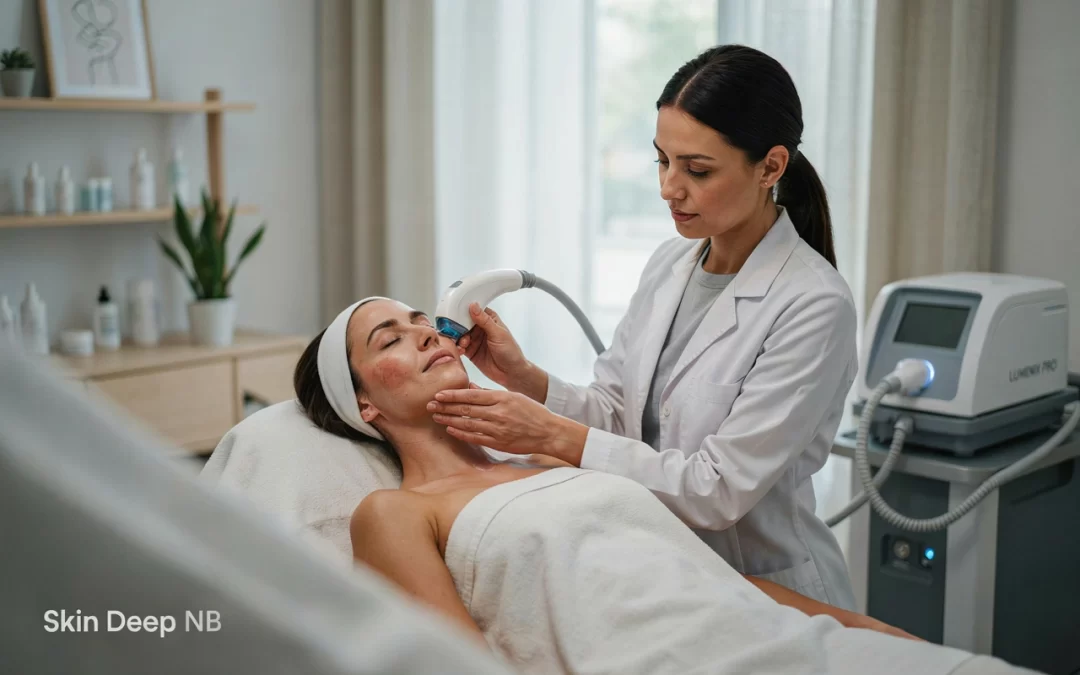
Sun exposure, acne, natural aging and changes in collagen can leave several different signs on the skin. Brown spots may become more visible, redness can make the complexion look uneven, and changes in texture can make the skin feel less smooth than it once did.
IPL therapy and laser skin resurfacing are two professional options patients may encounter when researching these concerns. Because both use light- or energy-based technology and are often discussed under the broad category of skin rejuvenation, it is easy to assume that they do essentially the same thing.
They do not.
Understanding what each treatment is designed to target can make it easier to discuss your options with an aesthetic provider. Skin Deep NB offers both treatments among its professional laser and corrective treatments, allowing a treatment plan to be selected according to the actual skin concern rather than simply choosing one technology for everyone.
The Main Difference Between IPL and Laser Resurfacing
The easiest way to understand these treatments is to begin with their primary purpose.
IPL stands for Intense Pulsed Light. Rather than using a single wavelength in the same way as a traditional laser, IPL delivers multiple wavelengths of light. Selected targets in the skin absorb that light energy, which makes IPL particularly relevant when discoloration or visible redness is the main concern.
Laser skin resurfacing takes a different approach. Depending on the technology and treatment settings, resurfacing is used to create controlled effects in the skin that support renewal and collagen remodeling. This makes it more relevant when texture, fine lines, scars or surface irregularities are priorities.
Skin Deep NB’s IPL therapy in New Braunfels is positioned for concerns including pigmentation, sun spots and redness, while its skin resurfacing treatment focuses more heavily on concerns such as fine lines, acne scars and uneven texture.
Neither treatment is universally better. Their value depends on what you are trying to improve.
When IPL May Make More Sense
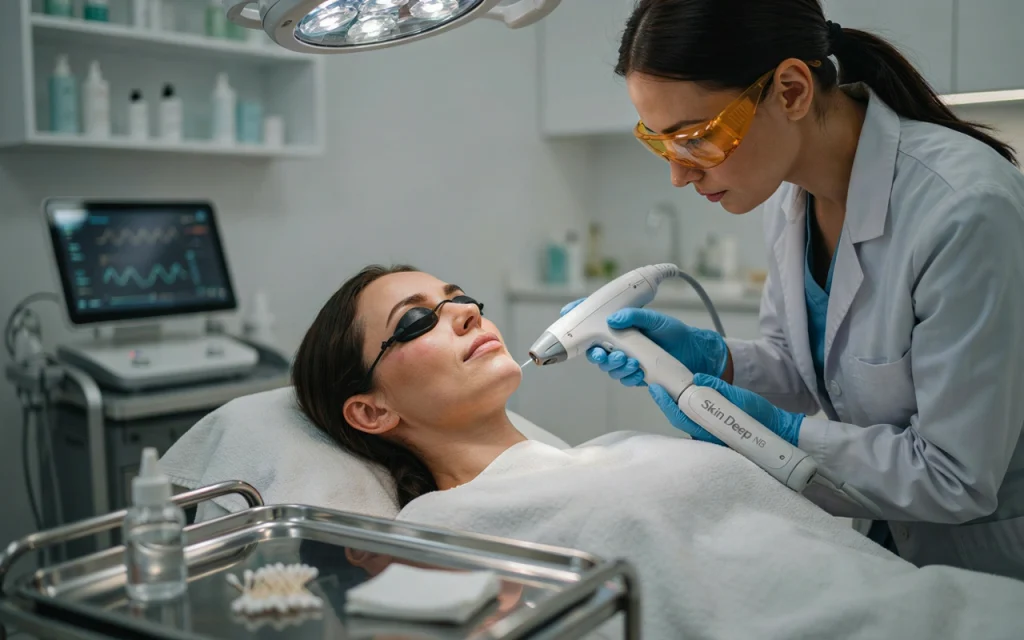
IPL can be especially relevant when the primary problem is color rather than texture.
Years of sun exposure may contribute to visible brown spots and uneven pigmentation. Some people are more concerned by facial redness or visible vessels. These concerns can make the complexion appear uneven even when the skin itself feels relatively smooth.
IPL directs controlled light toward selected pigment or vascular targets. The goal is not to remove layers of skin in the same way associated with some resurfacing procedures, but to address particular sources of discoloration.
This distinction is useful for patients in Central Texas, where cumulative UV exposure can be an important factor in visible skin changes.
Skin Deep NB has also published guidance about sun damage and med spa treatments in Texas, providing additional context for patients dealing with changes associated with prolonged sun exposure.
However, a brown spot should not automatically be treated simply because it looks like sun damage. Pigmented lesions can have different causes, and appropriate assessment matters before an energy-based cosmetic treatment is performed.
When Laser Skin Resurfacing May Be More Appropriate
Suppose discoloration is not your main concern. Instead, you notice rough texture, fine lines, acne scars or other surface irregularities.
This is where resurfacing may become more relevant.
Laser skin resurfacing is intended to promote controlled skin renewal. Depending on the procedure, it can target damaged skin and encourage collagen remodeling, helping improve the appearance and feel of the treated area over time.
Texture is an important distinction here. A dark spot and a depressed acne scar may both make the complexion appear uneven, but they represent very different skin concerns. Treating them effectively may therefore require different strategies.
Skin Deep NB’s existing guide to advanced laser treatments explains the broader range of laser-based options available at the practice, including treatments for pigmentation, scars and unwanted hair.
For patients considering resurfacing specifically, the decision should take into account the depth and type of concern, previous treatments and how much recovery they are comfortable accommodating.
IPL or Resurfacing for Acne Scars
Acne can leave more than one type of visible reminder.
Some people primarily develop discoloration after breakouts. Others have changes in the actual texture of the skin, including depressed scars. A person can also experience both at the same time.
This is why asking whether IPL or laser resurfacing is “best for acne scars” can oversimplify the decision.
When the main concern involves textural scarring, a collagen-remodeling treatment may make more sense than a procedure focused primarily on pigment or redness. Skin resurfacing is one possibility, while microneedling and RF microneedling are other treatments that may enter the discussion depending on scar characteristics.
Skin Deep NB also offers dedicated acne treatment in New Braunfels, which is particularly relevant when active breakouts are still occurring.
Controlling active acne and improving established scars are different goals. A thoughtful treatment plan should distinguish between them rather than treating every acne-related concern as the same problem.
What About Fine Lines and Early Signs of Aging?
Fine lines introduce another important difference between the two procedures.
If lines are accompanied by rough texture or broader changes in skin quality, resurfacing may be considered because of its role in skin renewal and collagen stimulation. IPL may contribute to a brighter and more even-looking complexion when pigmentation and redness make the skin appear aged, but its primary role is different.
There is another distinction as well: not all wrinkles originate in the skin itself.
Lines caused primarily by repeated facial movement, such as certain forehead or frown lines, may be better suited to neuromodulators than either IPL or resurfacing. Skin Deep NB offers Botox and Xeomin as separate treatment options for these dynamic expression lines.
This is why identifying the cause of an aesthetic concern matters as much as identifying where it appears.
Your Skin Type and History Matter
Treatment selection cannot be made accurately from a list of symptoms alone.
Natural skin tone, tanning or recent sun exposure, sensitivity, previous procedures, medications and the specific type of pigmentation or scarring can influence whether an energy-based treatment is appropriate and how it should be performed.
Skin Deep NB’s approach emphasizes individualized assessment and personalized treatment planning rather than applying the same procedure to every patient. Its New Braunfels location provides skin assessment and multiple aesthetic options so treatment can be matched to individual concerns.
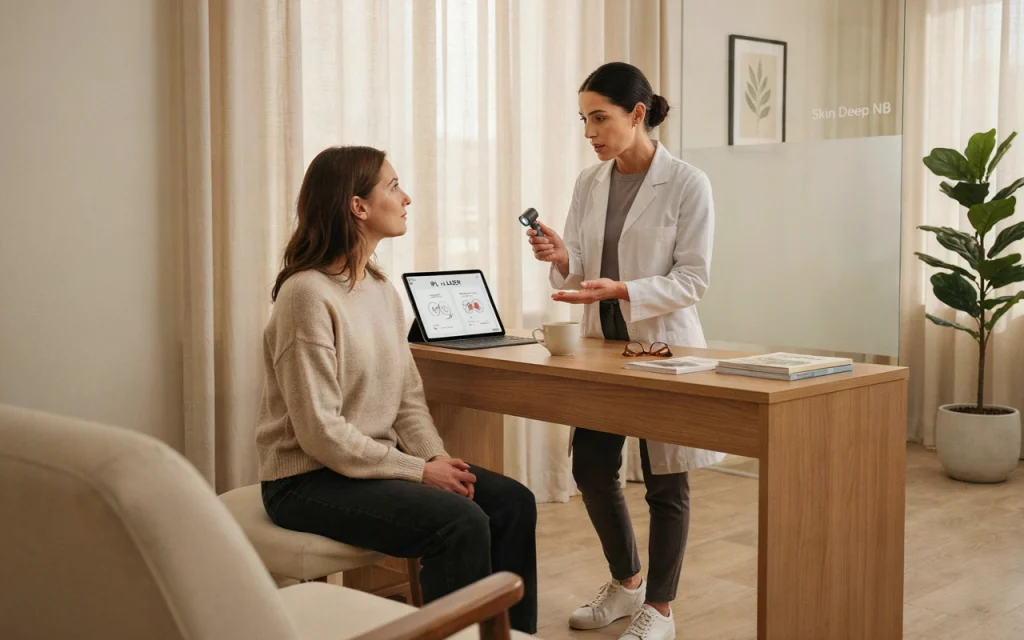
A consultation is therefore not simply a step before booking a procedure. It is where the difference between what you think you need and what your skin may actually benefit from can become much clearer.
Downtime Can Influence the Right Choice
The amount of recovery you can comfortably accommodate is an important part of choosing between IPL and laser skin resurfacing. Even when two treatments could potentially contribute to the same overall aesthetic goal, their post-treatment experiences may differ.
After IPL, temporary redness, warmth or darkening of treated pigment may occur before the area settles. Resurfacing treatments can involve more noticeable redness, sensitivity, dryness or peeling depending on the technology and treatment intensity.
This matters when treatment is planned around a wedding, vacation, professional event or other important date. Instead of scheduling based only on when an appointment is available, allow enough time for the expected recovery and for results to develop.
Your provider should explain the anticipated downtime for the specific treatment being recommended rather than relying on a general recovery estimate found online.
How Many Treatments Will You Need?
Neither IPL nor resurfacing should automatically be viewed as a one-session solution.
The number of treatments can vary according to the concern, its severity, the technology used and individual skin response. Someone addressing mild discoloration may have a different treatment plan from a patient with extensive sun-related changes or established textural scarring.
Results also develop differently. Pigmented areas treated with IPL may change in appearance as the skin responds, while improvements associated with collagen remodeling can develop more gradually.
This makes realistic expectations particularly important. The goal is usually progressive improvement rather than creating completely flawless skin after a single appointment.
Can IPL and Resurfacing Be Used Together?
Patients sometimes have several concerns simultaneously. Brown spots, redness, fine lines and uneven texture can all appear on the same face, particularly after years of cumulative sun exposure and natural aging.
In these situations, one treatment may not need to do everything.
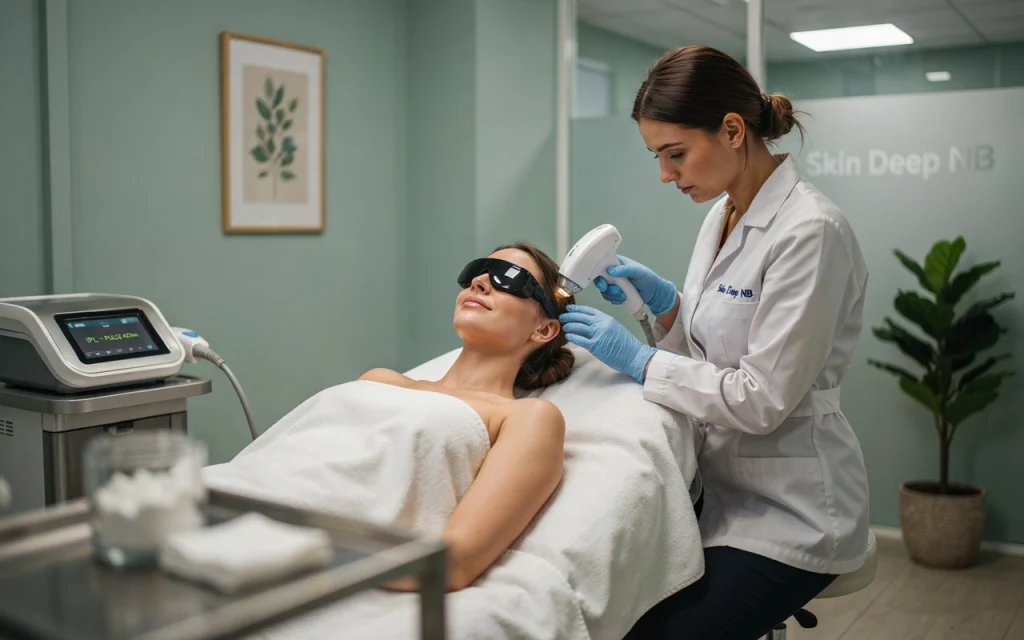
A provider may determine that different procedures have useful roles within a broader rejuvenation strategy. This does not necessarily mean performing IPL and resurfacing during the same appointment. Appropriate sequencing depends on the technologies being used, skin response and individual treatment goals.
The same principle applies to other aesthetic procedures. Skin Deep NB’s guide on choosing the right skin rejuvenation treatment explains why wrinkles, pigmentation, texture and scarring often require different approaches rather than one universal procedure.
A combination plan should therefore have a clear reason behind each treatment.
Protecting Your Skin After Treatment
Aftercare is an important part of both IPL and laser-based procedures.
The skin may temporarily become more sensitive following treatment, making it important to follow the instructions provided by your clinician. Aggressive exfoliation, unapproved active ingredients and unnecessary irritation during recovery can interfere with the healing process.
Sun protection deserves particular attention. This is especially relevant for patients living in New Braunfels, Canyon Lake and surrounding Central Texas communities, where significant sun exposure can occur throughout much of the year.
Professional treatment can address existing visible concerns, but it cannot prevent future UV exposure. Consistent sun protection and an appropriate home routine can therefore help support the longer-term appearance of treated skin.
Patients interested in professional home-care options can also discuss whether SkinBetter Science skincare products are appropriate for their individual needs.
Why Professional Assessment Matters
Online before-and-after photographs can make aesthetic treatments appear straightforward, but they do not show every factor involved in deciding whether a procedure is appropriate.
Pigmentation needs particular care because different forms of discoloration do not necessarily respond to the same treatment. Skin tone, recent sun exposure and medical or treatment history may also influence the decision.
The same applies to resurfacing. Treatment intensity should reflect the concern being addressed rather than simply using the strongest available setting.
Skin Deep NB is led by Cory Preuss, FNP-C, and emphasizes personalized aesthetic treatment planning. A professional assessment provides an opportunity to examine the skin, discuss previous treatments, consider expected downtime and establish realistic goals before proceeding.
Patients who are unsure which technology matches their concern can schedule a consultation with Skin Deep NB rather than choosing solely from treatment names.
Skin Treatments in New Braunfels and Canyon Lake
Local access can be useful when aesthetic care involves a treatment series, follow-up or longer-term maintenance.
Skin Deep NB serves patients in both New Braunfels and Canyon Lake. Patients closer to the lake area can explore available treatments through the Skin Deep Canyon Lake location, while New Braunfels patients have access to the practice’s broader range of aesthetic and corrective services.
The appropriate treatment should remain based on the same fundamentals at either location: what the concern actually is, how the chosen technology addresses it and whether it is suitable for the individual patient.
Making the Right Choice
IPL and laser skin resurfacing can both play useful roles in modern skin rejuvenation, but they address skin in different ways.
IPL may be particularly relevant when brown spots, sun-related pigmentation or certain forms of redness are the main concern. Laser resurfacing may make more sense when texture, fine lines, acne scars or broader skin renewal are priorities.
For someone experiencing several concerns, the answer may involve a carefully planned combination of treatments rather than choosing one technology to address everything.
The best starting point is therefore not asking whether IPL or laser resurfacing is universally better. It is identifying what is happening in your skin and selecting a treatment whose purpose genuinely matches that concern.
Frequently Asked Questions About IPL and Laser Resurfacing
Is IPL the same as laser skin resurfacing?
No. IPL uses broad-spectrum light and is commonly considered for selected pigmentation, sun spots and redness concerns. Laser resurfacing uses laser technology to create controlled effects in the skin and may be used for concerns such as texture, fine lines and scarring. Their treatment mechanisms and primary purposes are different.
Is IPL or laser resurfacing better for sun damage?
It depends on how the sun damage appears. IPL may be considered when visible brown spots, uneven pigmentation or redness are the primary concerns. When sun-related changes also involve texture or fine lines, a resurfacing procedure may be discussed. An assessment helps determine what type of damage is present.
Which treatment is better for acne scars?
Textural acne scars generally require a different strategy from post-acne discoloration. Laser resurfacing, microneedling or RF microneedling may be considered for certain textural scars, while pigmentation-related concerns may require another approach. Scar type and depth should be assessed before selecting treatment.
How soon will I see results?
The timeline varies according to the procedure and concern being treated. Some visible changes can occur during the weeks following treatment, while improvements involving collagen remodeling may continue developing gradually. Your provider can give a more specific timeline based on the procedure selected.
Can IPL and laser resurfacing be performed on every skin tone?
Suitability depends on the technology, treatment settings, skin characteristics and the concern being addressed. Certain light- and laser-based procedures require additional consideration for different skin tones because pigment in the skin can interact with the delivered energy. Professional assessment is therefore important.
Can I have these treatments during the summer?
Treatment timing should account for sun exposure before and after the procedure. Because avoiding excessive UV exposure and protecting treated skin can be important, your provider should consider your recent tanning, outdoor activities and ability to follow sun-protection instructions when planning treatment.
How do I know which treatment I need?
Begin with the specific concern rather than the name of a procedure. Brown spots, redness, fine lines, rough texture and acne scars can require different treatment mechanisms. An in-person skin assessment can determine whether IPL, resurfacing or another treatment better matches your goals.